UNESCO and MAB
The Archipelago Sea Area biosphere reserve is part of The Man and the Biosphere (MAB) programme, which is an international programme established by UNESCO in order to improve the relationship between man and the environment within a scientific basis. The program was started in the 1970s by UNESCO, the United Nations Agency for Education, Science and Culture. The biosphere reserves, whose foremost duty is to function as “learning places” for sustainable solutions, make up the core of the programme. The aim of the biosphere reserves is to improve the state of the natural environments, and enhance the vitality of peoples living environments, by promoting economic, social, cultural and ecological sustainable development within the biosphere reserve by the use of innovative approaches.
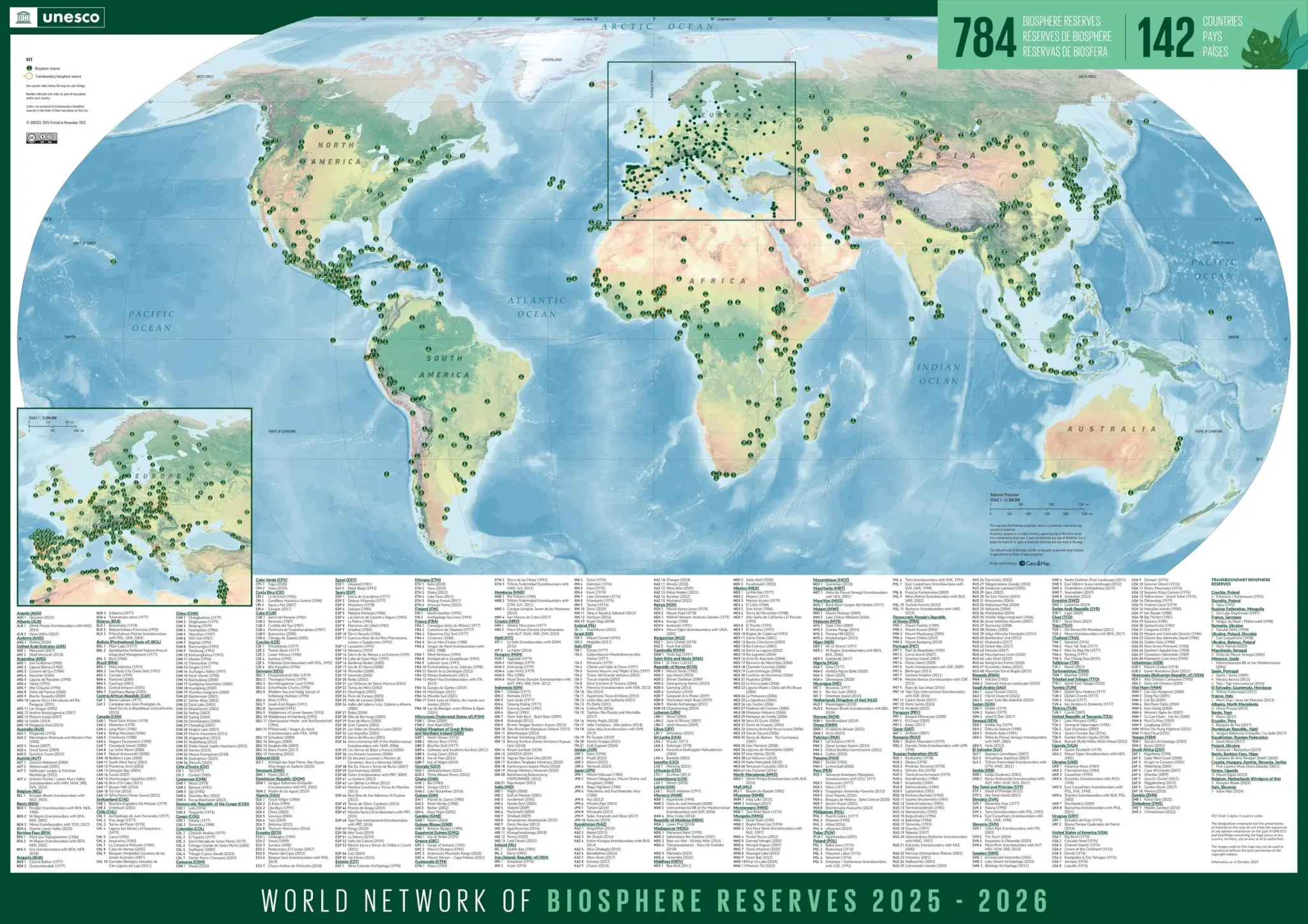
As of this year, there are close to 800 biosphere reserves in more than 140 countries around the world. In Finland, there are currently two biosphere reserves, one in North-Karelia and one in the Archipelago Sea. To promote an exchange of experiences and collaboration between different reserves, smaller regional or thematic networks have been formed within the MAB program. The most important collaboration networks for the Archipelago Sea biosphere reserve are EuroMAB (Europe, North America and parts of Russia), the network for islands and coastal zones, and NordMAB,which also includes Canada. Finland’s two biosphere areas have played a central role for the development of the NordMAB network. The Archipelago Sea Area Biosphere Reserve has also an active role in the Biosphere for Baltic -network that includes biosphere reserves along the coast of Baltic Sea.
Biosphere reserves consist of three zones. The core area is a nature conservation area that focuses on preserving the area’s ecosystems, species and genetic diversity.
The core area is surrounded by or borders a buffer zone, where human activities are small-scale. These areas provide favourable conditions for research, education and testing sustainable methods to address local and global challenges.
The third zone of a biosphere reserve is the transition zone, where people live and where socio-ecologically and ecologically sustainable economic activities can be carried out and developed.
Each biosphere reserve and its organisation is unique, shaped by the challenges and opportunities presented by the environment as well as by the people who live and visit there, and the natural resources of the area. A biosphere reserve is established by the International Coordination Council for the MAB-programme (ICC), on the basis of an application submitted at the national level. A high level of participation from the local communities is necessary for the establishment of a biosphere reserve. Once the reserve has been established, funding is sought and local organisation is planned within the framework of the international objectives of the MAB programme. In Finland, biosphere reserves fall under the jurisdiction of the regional Economic Development Center, which also provide a core budget.
The vision of the MAB programme is to create a world in which people are aware of the impact of their own actions on our shared future, both globally and locally. UNESCO aims to use the MAB programme to inspire people to work together and sustainably to create vibrant communities, so that the richness of nature and our cultures may be preserved for future generations.